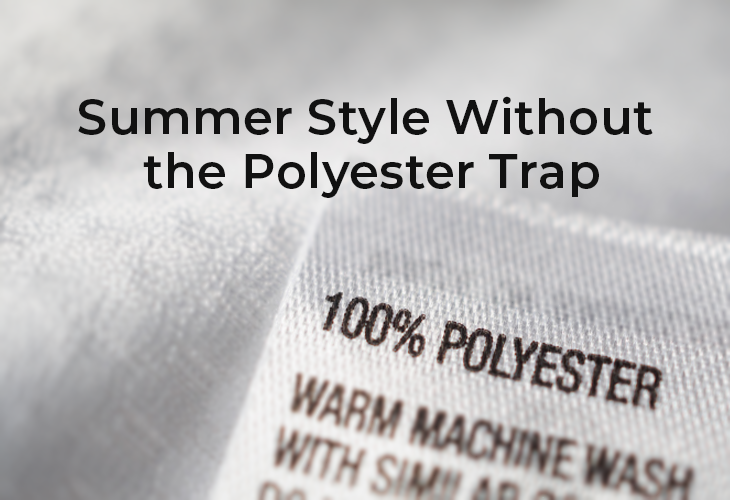
Summer often makes us want a wardrobe refresh.
A few new dresses, lightweight tops and holiday outfits can be tempting, especially when shops are full of affordable seasonal pieces. But before filling your basket, it’s worth taking a closer look at what those clothes are actually made from.
More often than not, the answer is polyester.
The surprising part? It’s not just fast fashion. Many premium and “conscious” brands now rely heavily on synthetic fabrics, including recycled polyester.
View this post on Instagram
The problem is simple: polyester is plastic.
Every time polyester clothing is worn, washed and eventually discarded, it sheds tiny plastic particles known as microplastics. These particles end up in our rivers, oceans, soil and food chain. Researchers have also found microplastics in human blood, lungs and other tissues, raising growing concerns about how constant exposure may affect our health over time.
And while recycled polyester is often marketed as a sustainable solution, studies suggest it may release just as many, if not more, microplastic fibres than virgin polyester.
View this post on Instagram
If microplastics aren’t concerning enough, here’s an unexpected fact: a 2008 study found that female dogs wearing 100% polyester garments had significantly lower pregnancy rates than those wearing cotton or wool. While this doesn’t prove polyester affects human fertility, it does raise questions about the long-term effects of keeping synthetic fabrics against some of the body’s most sensitive areas day after day.
View this post on Instagram
Then there’s the comfort factor.
Plastic doesn’t belong in a heatwave. Polyester traps heat, absorbs odours and often feels less breathable than natural fibres. Linen, cotton, and silk have remained summer staples for generations because they allow skin to breathe and keep you comfortable even on the warmest days.
Of course, a £20 summer dress can feel like an easy purchase. But when garments are designed to last only a season, the real cost extends far beyond the price tag. Fast fashion fuels overconsumption, creates enormous amounts of textile waste and encourages a cycle of buying more and wearing less.
This summer, shop a little more slowly.
A sustainable summer wardrobe doesn’t have to be perfect. It simply starts with making more informed choices.
Check the label. Choose natural fibres where possible. Invest in pieces you’ll wear year after year rather than just for one holiday or one trend.
Because the most stylish wardrobe isn’t the one with the most clothes.
It’s the one filled with pieces that feel good, last longer and leave a lighter footprint on the planet.
View this post on Instagram
