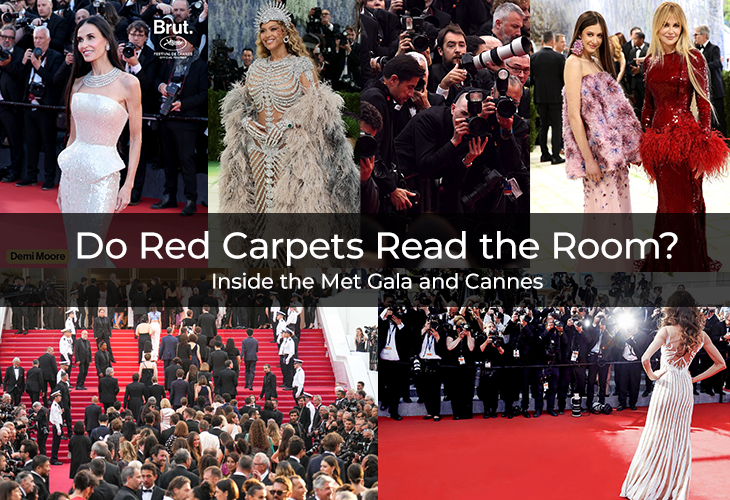
Last month belonged to the red carpets. Between New York and the French Riviera, it became clear that these events are no longer just part of culture. In many ways, they are the culture.
At the Met Gala, the conversation often moves so quickly that the exhibition itself feels secondary to the content surrounding it.
The carpet is no longer an entrance. It is the destination.
Fashion still provides the visuals. Film still provides the setting. But neither the Met Gala nor Cannes is really only about fashion or cinema anymore. They are about influence, branding, cultural relevance, and attention.
View this post on Instagram
And financially, the formula works brilliantly.
The Met Gala raises millions while generating billions of social media impressions. Cannes remains one of the world’s most photographed events, despite regular criticism of celebrity excess and luxury. Both events understand a reality that many industries are still learning: controversy can be just as valuable as admiration.
Every year, people ask the same question: Are these events really reading the room?
At a time of economic uncertainty, layoffs, political tension, and growing frustration with displays of extreme wealth, these spectacles can feel disconnected from everyday life.
Yet the criticism rarely hurts them. If anything, it helps. The internet may claim to reject celebrity culture, but it continues to engage with it endlessly. We criticise it, debate it, share it, and keep it circulating.
View this post on Instagram
Maybe the Met Gala is reading the room — just not emotionally. Algorithmically.
It understands what today’s culture rewards: virality, outrage, aspiration, and contradiction. The event no longer exists just for the people inside the museum. It exists for the screenshots, memes, debates, and reaction videos that follow.
The same is increasingly true of Cannes, where, for some attendees, being seen can matter as much as the films themselves.
And perhaps that’s the most uncomfortable truth of all. The red carpets no longer reflect celebrity culture alone.
It reflects us.
Our attention spans, our contradictions, and our fascination with wealth, access, and visibility.
